
Why Are Gutters Important? A Complete Guide for NZ Homeowners
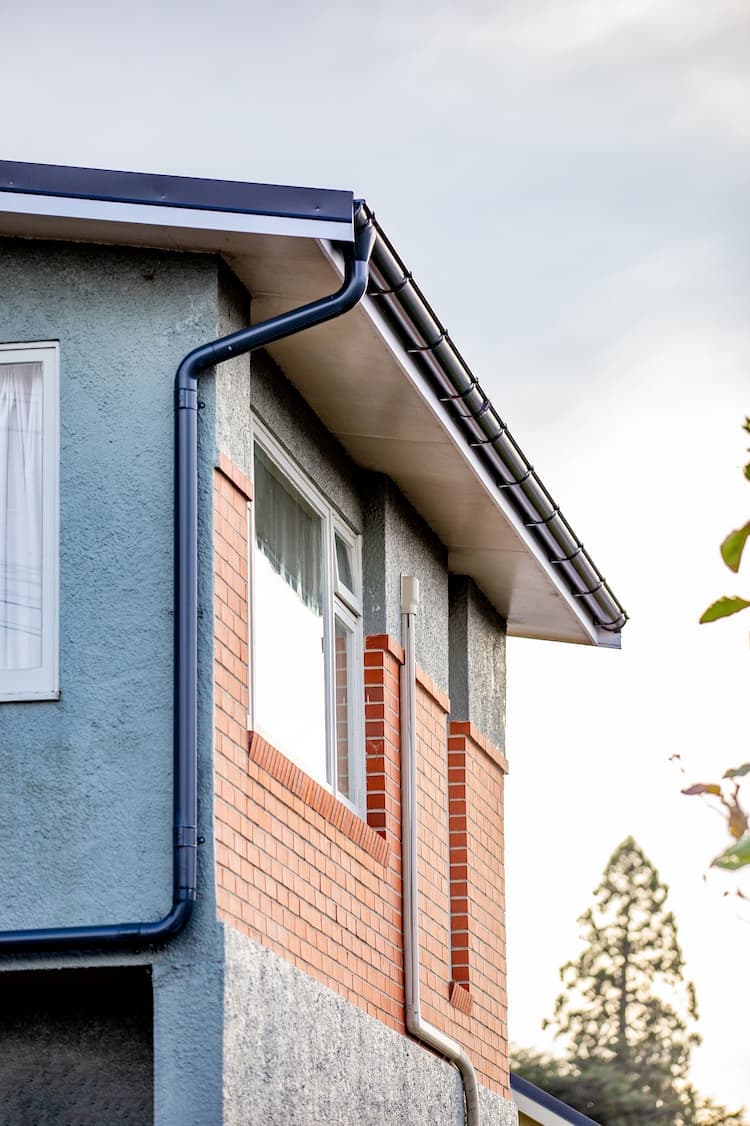
Your home's rainwater system is easy to overlook until it fails. The channel running along the edge of your roofline, and the pipes that connect to it, do a surprisingly critical job: they collect the rainwater runoff from your roof and channel it safely away, protecting your property from water ingress and your foundations and landscaping from uncontrolled water damage. Here's everything you need to know about New Zealand rainwater systems.
What Are Gutters Made Of?
Modern gutters are manufactured from several different base materials, each with its own set of pros and cons:
- Steel: Durable, affordable, and available in a wide range of colours to complement your roof, quality steel gutters can last 20–30 years in mild environments with proper maintenance.
- Aluminium: Lightweight and long-lasting. More expensive than steel, but an excellent choice for coastal properties where corrosion is a concern.
- uPVC: Affordable and corrosion-proof, but can become brittle over time in high UV environments.
What Are the Main Gutter Profiles?
Gutters come in various profiles. The most common in New Zealand are:
- Box gutter: An angular profile that is commonly used on commercial properties. Good water capacity and a clean, sharp aesthetic.
- Half-round: A classic, semi-circular profile. Flows well because debris has less chance to catch on corners, making it one of the lowest-maintenance options available.
- Quad: A decorative profile with a gentle curve. Common on older homes and heritage properties.
At Edwards & Hardy, we supply and install Lindab steel gutters — the strongest and most durable gutter system available in New Zealand. Lindab comes with a built-in overflow system and is designed to last the life of the roof.
What Do Downpipes Do?
Downpipes are the pipes that connect your gutters to your ground drainage or water management system. Generally, this will be a stormwater drain, a soak hole, a collection tank, or a detention tank. The number of downpipes required depends on the size and design of your roof and the carrying capacity of your gutter. Most homes need a downpipe at every corner and every 10–15 metres.
How Long Do Gutters Last?
A well-installed steel or uPVC gutter system typically lasts 20–30 years, while an aluminium gutter can last considerably longer with proper maintenance. Lifespan depends heavily on:
- Material quality — thicker gauge materials cost more upfront but last significantly longer and resist denting from ladders.
- Installation quality — correct fall (the gradient of the gutter toward the downpipes), proper bracket spacing, and fully sealed joins make a significant difference to longevity.
- Maintenance — regular cleaning prevents the build-up of organic debris, which causes standing water and premature failure.
Signs Your Gutter Needs Replacing
- Pooling water around your home's foundations after rain — often the first sign of a failing gutter.
- Water dripping or pouring from joins during rain.
- Sagging sections where brackets have failed or the gutter has pulled away from the fascia.
- Peeling paint on fascia boards — a sign water has been getting behind the gutter.
- Water staining or rot damage on your home's cladding or fascia boards.
- Visible rust, holes, or cracks in the gutter material.
Gutter Maintenance Tips
The single most effective thing you can do to extend the life of your gutter is to keep it clean. Clear out leaves and debris at least twice a year — more often if you have overhanging trees. After clearing, flush the gutter with a hose and confirm water is flowing freely to each downpipe, with no pooling. If you notice any joints starting to separate, address them early before water starts to flow back towards your fascia boards and cladding. For safe DIY methods, investigate using an extendable gutter cleaning wand, or a permanently fixed LadderSecure bracket — both products can assist you in safely cleaning your gutter.
Ready to Replace Your Gutter?
Edwards & Hardy is one of New Zealand's leading gutter maintenance specialists. We install Lindab steel gutters because they are designed to perform and made to last. If your gutter is past its best, contact us for a free quote.