
Internal Gutter Conversion: Why Replacing Internal Gutters Makes Sense for Kiwi Homes
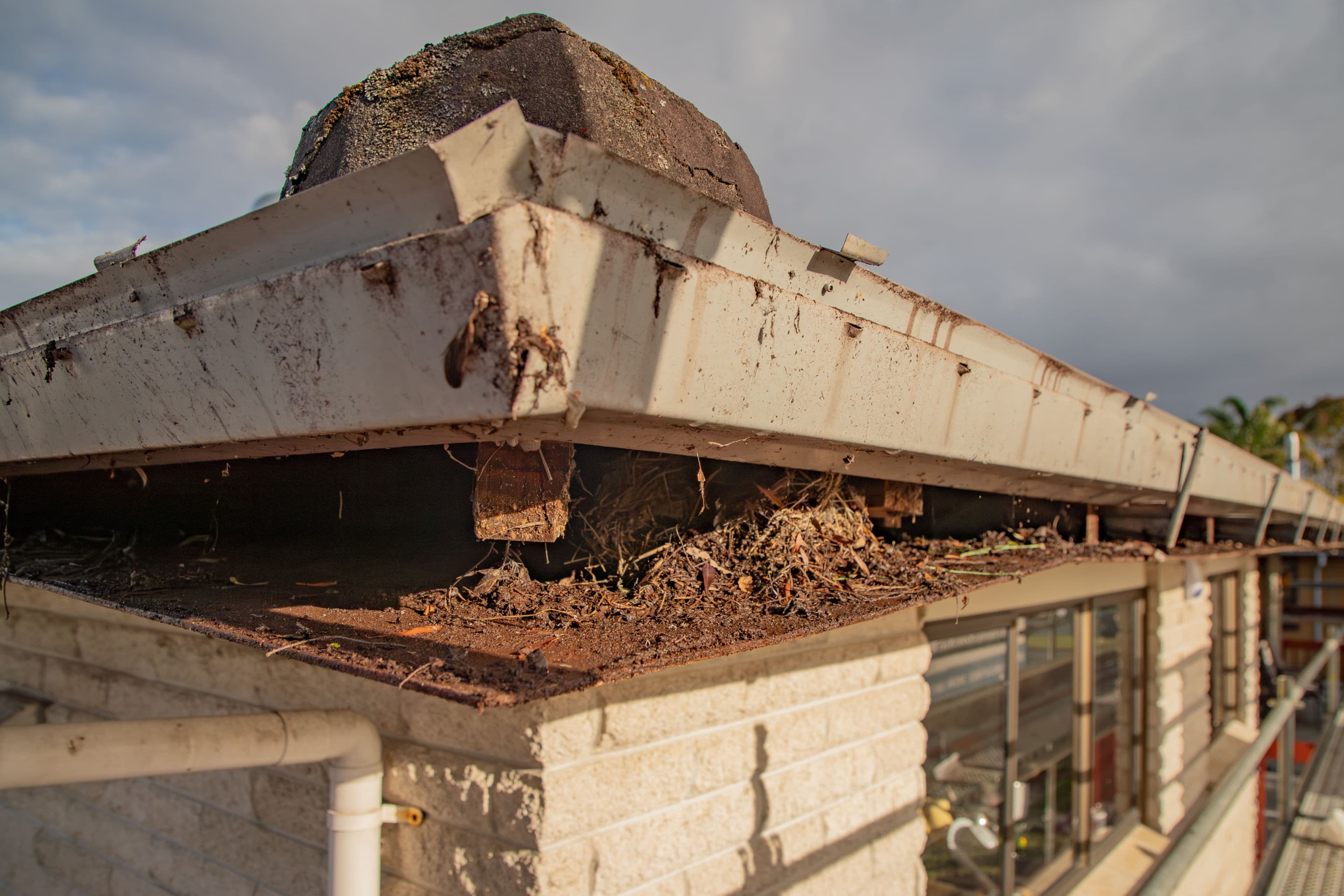
In the 1980s and 1990s, internal gutter systems were a popular choice for Kiwi homes. By concealing the gutter behind the metal fascia, these systems offered a streamlined, modern look. But while they might have looked sleek on the outside, they've proven to be problematic over time — especially in New Zealand's increasingly extreme weather.
At Edwards & Hardy, we're seeing a rise in demand for internal gutter conversions — replacing internal gutters with more practical external systems — and for good reason.
What Are Internal Gutters?
Internal gutters (also called "concealed" gutters) sit behind the metal fascia, hidden from view. Originally marketed for their aesthetics, they were commonly installed in homes built between the 1980s and early 2000s.
Unfortunately, they come with significant long-term drawbacks.
Why Internal Gutters Cause Problems
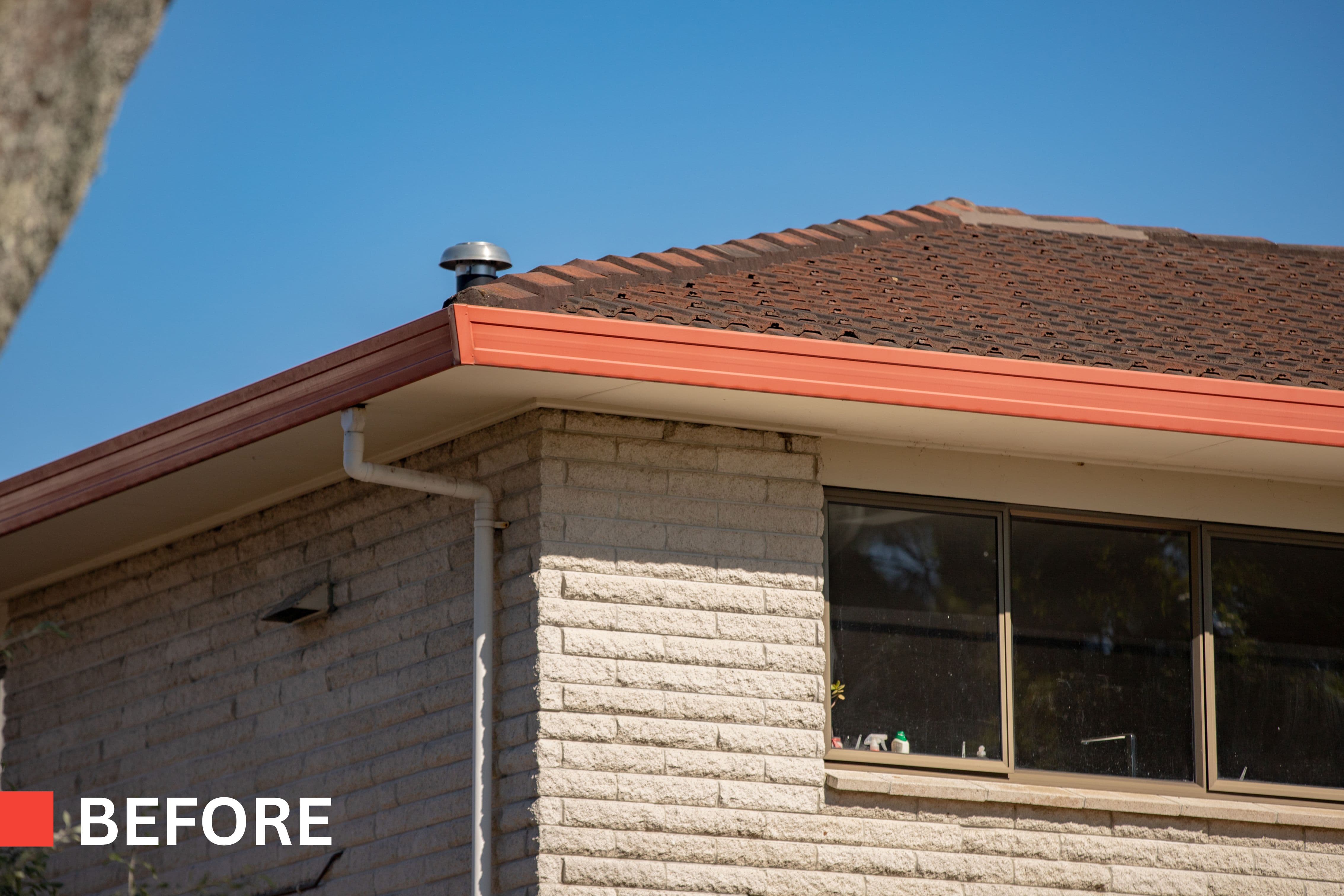
A typical internal gutter after years of difficult-to-access build-up — debris, dirt, and plant growth that would be invisible from ground level.
While internal gutters may look tidy, they often suffer from:
- Low capacity — They're narrow and shallow, meaning they quickly overflow during heavy rain.
- Difficult access — Being hidden behind the fascia makes them hard to inspect or clean.
- Premature failure — Over time, poor drainage can damage the internal gutter.
- Backflow issues — Overflowing gutters can lead to ceiling cavity and wall damage, leaks, damp, and mould.
In short: they were a product of their time, but they haven't aged well.
The Benefits of Converting to External Gutters
External gutters sit outside the fascia and are fully visible and accessible. Converting to an external system offers:
1. Better Water Flow Capacity
Modern external gutters are wider and deeper, handling higher volumes of water — even in extreme weather.
2. Easier Maintenance
You can see blockages, clean them yourself (especially if paired with our Ladder Secure™ brackets), and carry out simple repairs before problems escalate.
3. Reduced Risk of Internal Damage
By keeping water out of the roof cavity, external gutters protect your insulation, framing, and ceilings from moisture.
4. Modern, Durable Design
Today's external gutter systems — like Lindab steel gutters — are sleek, strong, and come in a range of colours to match your home's aesthetic.
Our Internal to External Gutter Conversion Process
Every conversion starts with an inspection. From there, we:
- Remove the internal gutter system and fascia
- Install new external fascia and gutters
- Ensure downpipes and stormwater connections are correctly positioned
- Finish the job to a high standard — often with IN/OUT™ Debris Diverters and Ladder Secure™ brackets for future maintenance
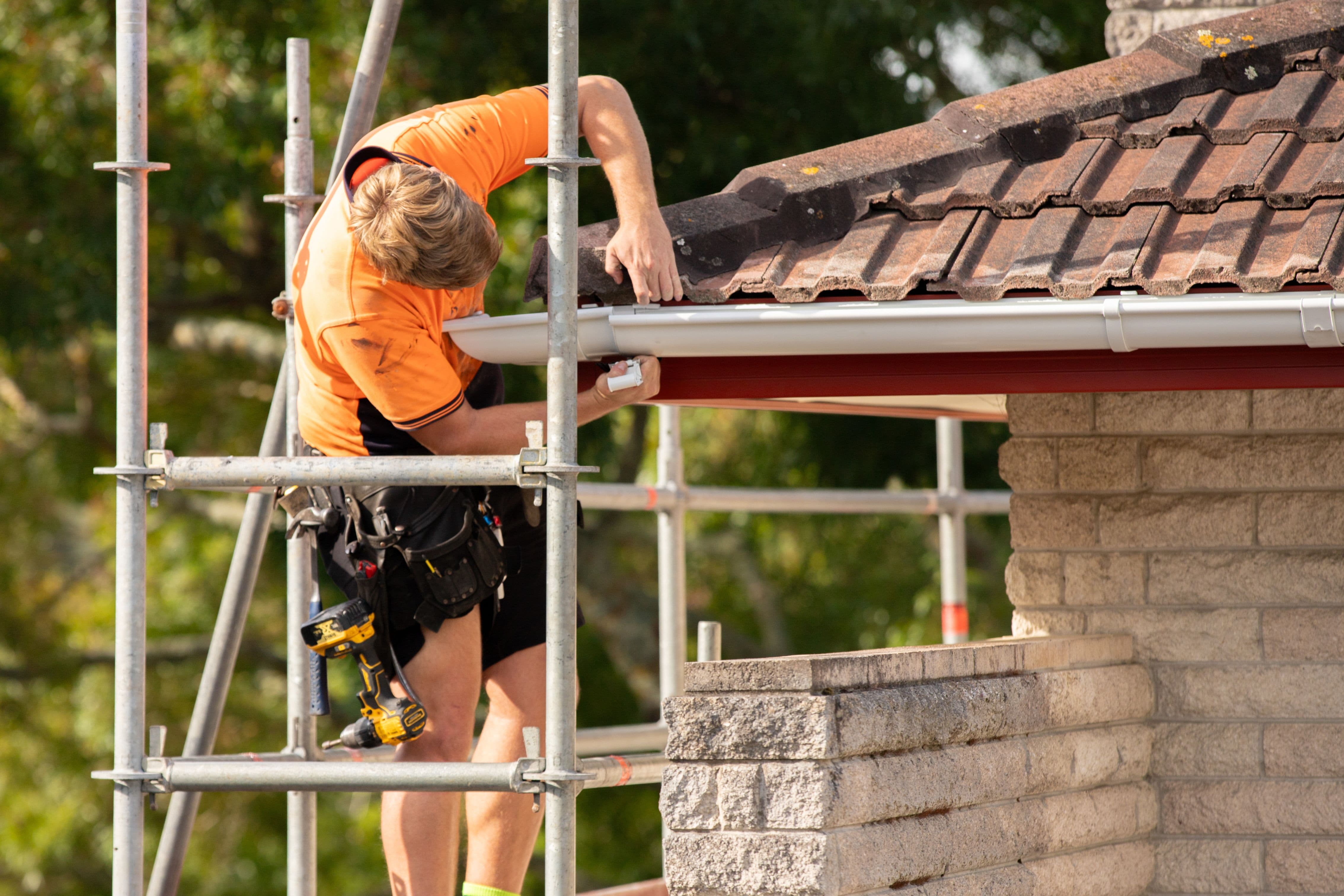
Our team works safely from scaffolding to fit the new external gutter system — ensuring correct fall, alignment, and a clean finish.
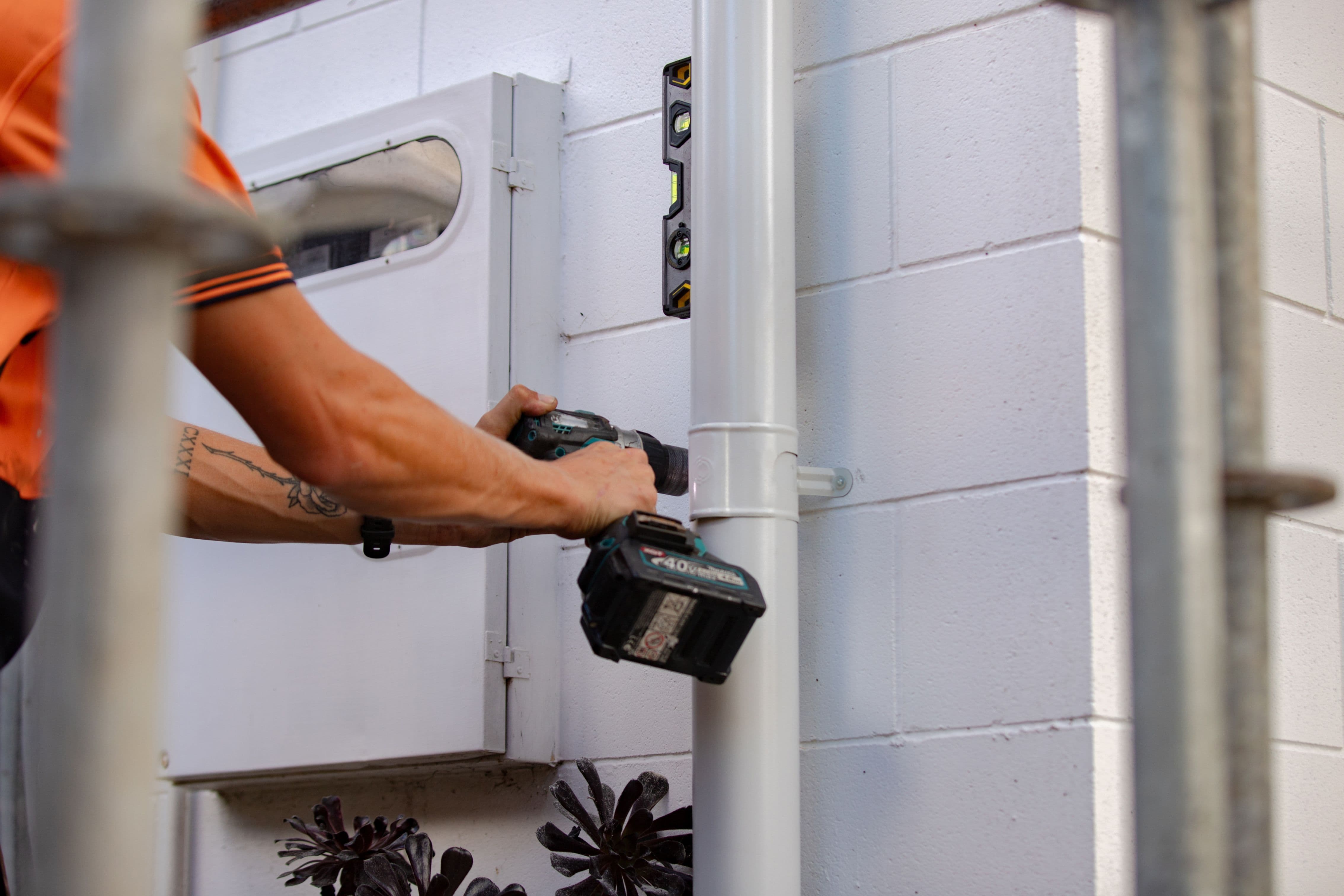
Downpipes are carefully positioned and levelled to ensure efficient stormwater discharge away from the building.
Our team handles the entire process — safely, professionally, and with minimal disruption to your home. Learn more about our roofing services.
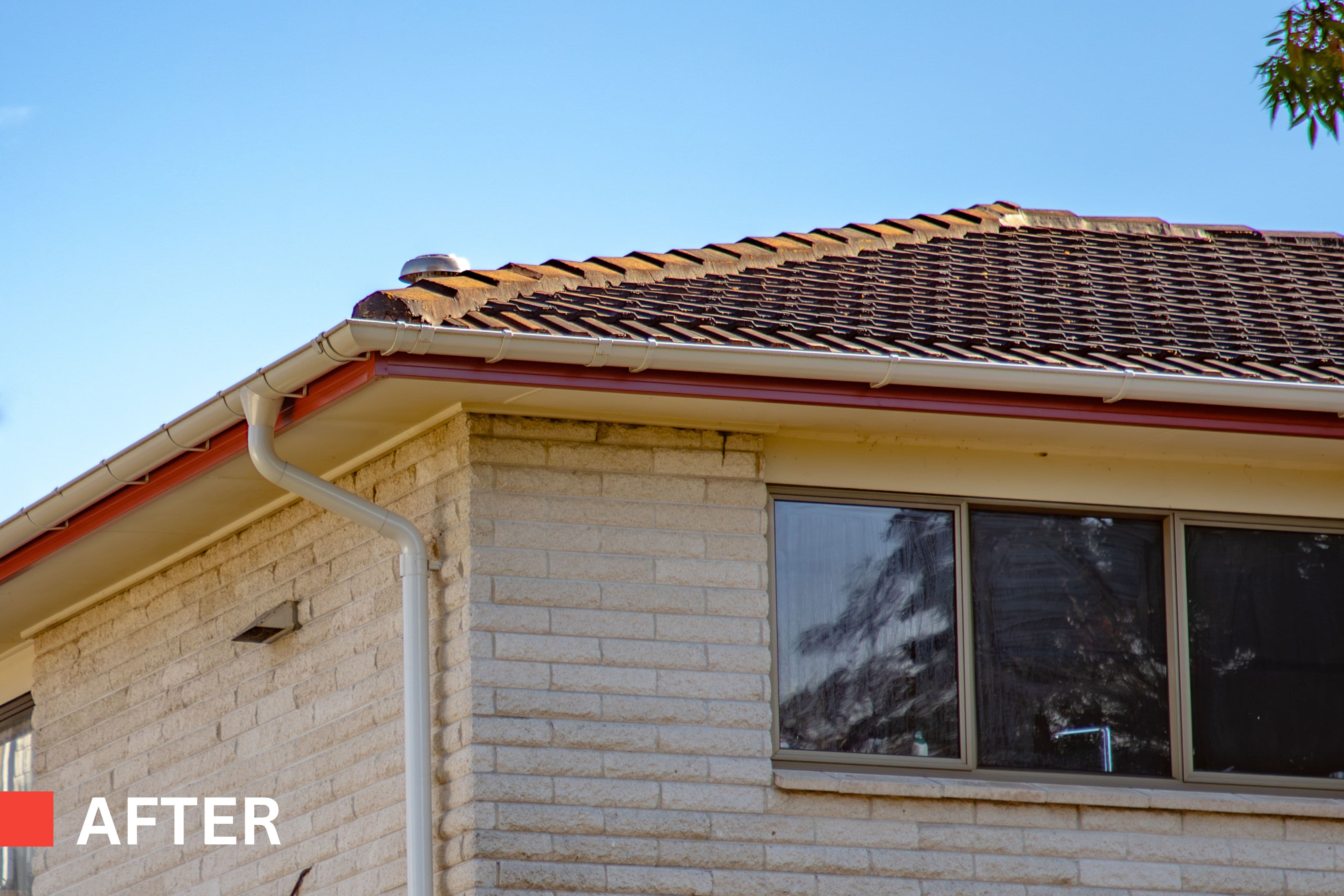
The finished result — a clean, modern external gutter system replacing the old internal gutters on this brick home.
Frequently Asked Questions
What's the main issue with internal gutters?
Internal gutters are prone to blockages and overflow, which can cause water to enter your ceiling cavity and damage your home.
How much does it cost to convert internal to external gutters?
Costs vary depending on your property design and materials, but we can provide a free inspection and quote.
Will this improve the value of my home?
Yes. External gutter systems are more modern, practical, and easier to maintain — all positives for future buyers.
Ready to Upgrade? Contact Us
If your home has internal gutters and they are overflowing, or you've noticed staining or damp patches inside, don't wait for the problem to get worse.
We can inspect your system, recommend the best solution, and give you peace of mind that your roof drainage is future-proof.
Contact Edwards & Hardy today — call us on 0800 666 677 or email admin@edwardsandhardy.co.nz.