
How to Install Gutters: A Step-by-Step Guide for NZ Homeowners
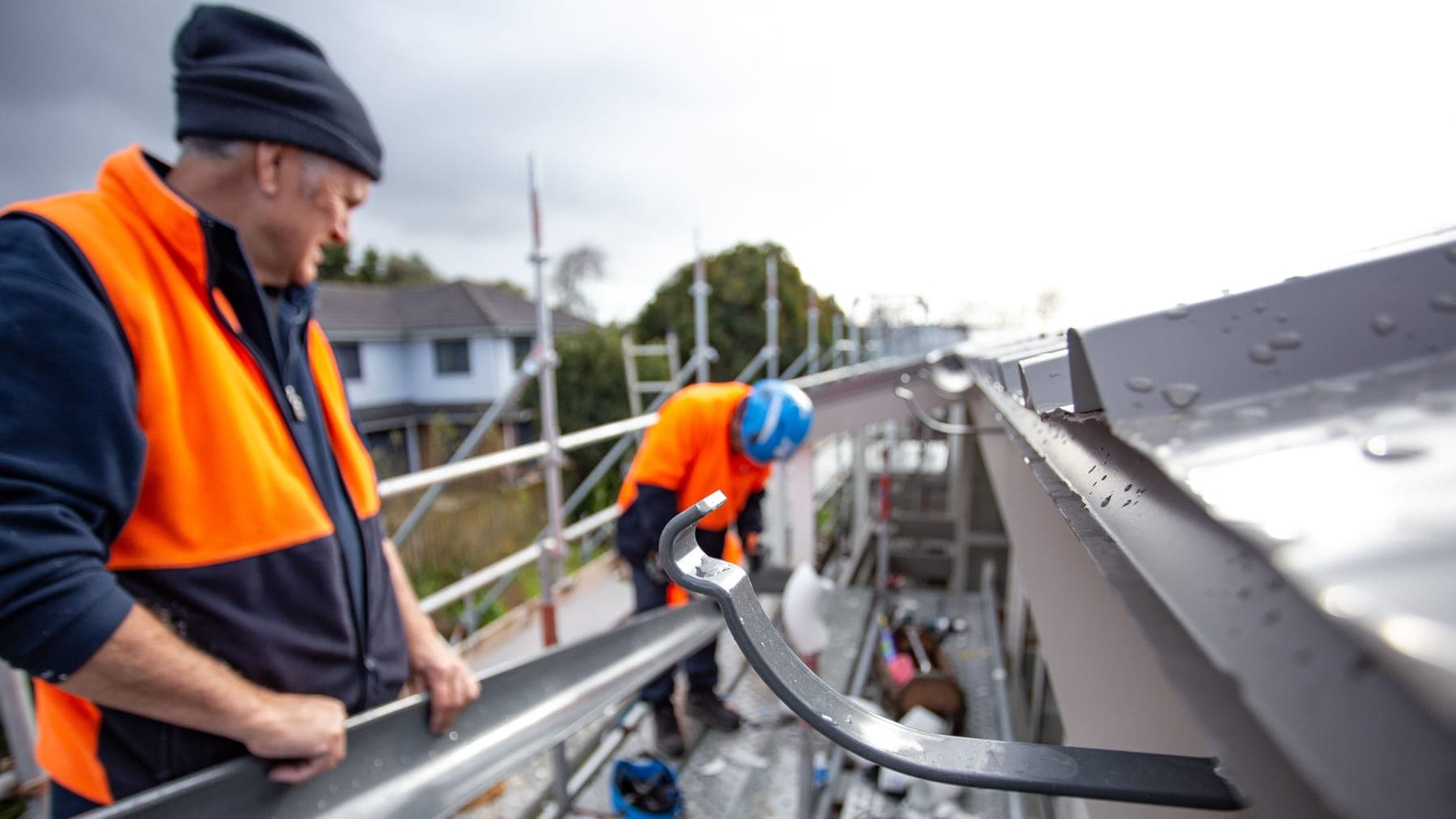
Installing gutters (or spouting, as we call them in New Zealand) is a project that confident DIYers can take on for smaller or single-storey homes. Done correctly, a well-installed gutter system protects your home's foundations, cladding, and landscaping from uncontrolled water runoff. Done poorly, it can lead to leaks, water damage, and premature gutter failure. Here's how the professionals approach it — and what you need to know before you start.
Before You Start: Planning Your Gutter System
Good gutter installation starts with good planning. Before you buy a single bracket, work out the following:
- Gutter profile and material — Decide on your profile (square-line, half-round, quad) and material (steel, aluminium, uPVC). Steel is the most common for new homes. See our guttering guide for more detail on your options.
- Gutter sizing — Standard residential gutters in NZ are typically 125mm to 150mm wide. Larger roofs, or those with high rainfall exposure, may also need additional downpipes.
- Downpipe locations — Plan your downpipe positions before ordering materials. You generally want a downpipe at every corner and at maximum 10–15 metre intervals along a run. Downpipes should discharge to your stormwater system, soakhole, or rainwater tank.
- Fall (gradient) — Gutters must slope toward each downpipe outlet to prevent water pooling. A fall of 1:500 (2mm per metre) is the typical recommendation. Too flat and water pools; too steep and it's visible and looks wrong.
Tools and Materials You'll Need
- Gutter sections (cut to length or order pre-cut)
- Gutter brackets or fascia brackets (spaced at 500–900mm centres typically)
- End caps (left and right)
- Outlet/drop connectors for each downpipe location
- Downpipes, elbows, and fixings
- Gutter joiners and sealant/pop rivets
- Chalk line or string line
- Drill and drill bits
- Tin snips or angle grinder to cut gutter sections
- Ladder and scaffold if on a two-storey home
- Safety gear: non-slip footwear, gloves, safety glasses
Step-by-Step Gutter Installation
Step 1 — Mark Your Fall Line
Establish where your high point (furthest from the downpipe) and low point (at the downpipe outlet) will be. Snap a chalk line along the fascia board showing the fall. This becomes your guide for every bracket position.
Step 2 — Install the Downpipe Outlet Fittings
Fit the downpipe outlet/drop connector to the fascia or gutter section first. This anchors your reference point and ensures everything drains to the right spot.
Step 3 — Fix the Brackets
Starting from your high point, screw or nail brackets to the fascia along your chalk line at the appropriate spacing (check your gutter system's specifications — typically 500mm centres for steel, 900mm for uPVC). Ensure each bracket aligns precisely with the fall line.
Step 4 — Install End Caps
Fit end caps to the closed ends of each gutter run before hanging the gutter sections. Apply sealant and rivet if required. It's much easier to do this before the gutter is fixed to the home.
Step 5 — Hang the Gutter Sections
Clip or slot the gutter into the brackets from one end to the other. On longer runs, you'll need joiner pieces to connect sections. Apply sealant at each join and rivet or clip according to your system's requirements. Avoid leaving unsealed joins — these are the most common source of leaks.
Step 6 — Install Downpipes
Connect downpipes to the outlets using offset elbows if needed (to bring the pipe flush with the wall). Fix downpipes to the wall with pipe clips at maximum 1.2 metre intervals. The lower end of the downpipe should terminate into a shoe fitting that directs water away from the building or connects to your drainage system.
Step 7 — Test with Water
Run a hose into the high end of the system and check that water flows freely to each downpipe outlet, that there are no leaks at joins or outlets, and that no water is pooling.
Common Mistakes to Avoid
- Insufficient fall — The most common cause of standing water and premature failure. Always use a level and string line.
- Bracket spacing too wide — Results in sagging, especially under heavy rain or debris load.
- Unsealed joins — Use the correct sealant specified for your gutter system and allow proper cure time before testing.
- Downpipes that discharge against the foundation — Water must be directed away from the building. Use a shoe fitting or connect to drainage.
When to Call a Professional
For two-storey homes, complex roof geometries, or if you don't have the right tools and scaffolding, professional gutter installation is the safer and more reliable choice. Edwards & Hardy installs Lindab steel spouting systems – New Zealand’s strongest gutter with a built in overflow system. Request a free quote.